

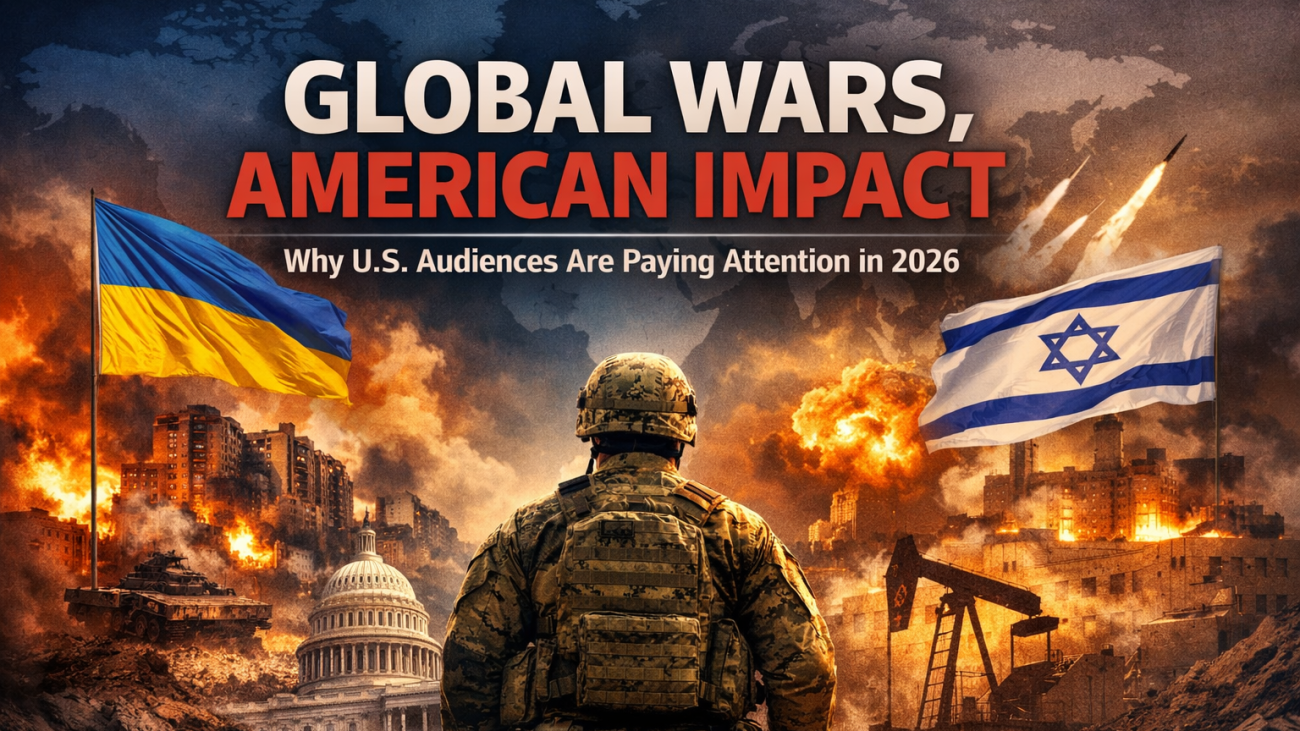
Global wars are no longer distant stories that Americans read about and forget by the next day. In 2026, conflicts tied to Ukraine and the wider Middle East are influencing U.S. foreign policy, national security decisions, energy markets, and daily public debate in ways that feel immediate inside the United States. Recent reporting shows the Ukraine war remains active, with fresh drone attacks, diplomacy shifts, and U.S. policy changes, while the Middle East conflict has widened, affecting Iran, Israel, neighboring countries, and U.S. interests in the region.
One reason Americans are paying closer attention is simple: Washington is deeply involved. In the Ukraine conflict, the United States has continued to shape diplomacy and international responses, including a notable March 5 vote in which the U.S. opposed an IAEA board resolution condemning attacks on Ukraine’s power grid, saying it wanted to avoid moves that could hinder peace efforts. At the same time, Ukrainian President Volodymyr Zelenskiy said Kyiv would help the U.S. counter Iranian drone threats, showing how these theaters are increasingly connected in strategic thinking.
The Middle East is drawing even more attention because the conflict now has direct implications for U.S. forces, U.S. diplomacy, and the global economy. Reuters reported on March 7 that the Trump administration bypassed congressional review to approve a possible military sale to Israel worth hundreds of millions of dollars. Meanwhile, Reuters and AP both reported that the broader U.S.-Israel conflict involving Iran has sent shockwaves through energy markets, transport, and business activity, while AP also reported rising threats against U.S. assets in the region.
Another reason this matters to Americans is the economy. When conflict spreads across major energy-producing regions or threatens shipping routes, the effects can show up far beyond the battlefield. Reuters reported that the conflict involving Iran and Israel has disrupted business operations and raised concerns around oil flows and regional stability. That matters in the U.S. because higher global energy risk can push up costs tied to transport, goods, and consumer confidence.
There is also a political reason Americans are following these wars so closely. Foreign conflicts often become domestic issues in election cycles and policy debates. Decisions about military aid, arms sales, sanctions, diplomacy, border security, and America’s role in the world all feed into wider arguments about leadership and national priorities. The recent U.S. stance at the IAEA on Ukraine, along with emergency arms approvals tied to Israel, shows that international crises are not separate from U.S. politics — they are now part of the political conversation at home.
Human impact is another major factor. Americans are not just following military strategy; they are watching images of destroyed infrastructure, civilian suffering, displacement, and humanitarian shortages. Reuters reported this month that a key Gaza crossing would be reopened for aid, underscoring how access to food and supplies remains a central issue. Stories like these keep public attention high, especially when U.S. decisions are seen as influencing the course of events.
At the same time, the Ukraine war continues to evolve rather than fade. Reuters’ ongoing war coverage and recent updates show continued Russian strikes, drone warfare, and diplomatic repositioning. That persistence has made the war part of the long-term mental map of global risk for many Americans, especially as policymakers increasingly link European security, drone warfare, NATO concerns, and broader geopolitical competition.
For U.S. readers, the big question is no longer whether foreign wars matter at home. They do. They affect prices, policy, public opinion, military posture, and America’s global image. In 2026, Americans are watching global wars more closely because the consequences now feel closer, faster, and harder to separate from everyday life in the United States.
Add a Comment